International Journal of
Environmental Research
and Public Health
Review
Parenting Programme Structure, Potential Barriers, and
Facilitators: A Scoping Review
Ana Ramos 1, * , Filomena Matos 2 and H é lia Soares 3
1 Instituto Polit é cnico de Set ú bal, Escola Superior de Sa ú de. NURSE’IN-UIESI, Campus do IPS, Estefanilha,
2910-761 Set ú bal, Portugal
2 University of Algarve, Health School. UICISA: E. NURSE’IN-UIESI, University of Algarve,
Campus de Gambelas, 8005-139 Faro, Portugal
3 University of Azores, Health School. NURSE’IN-UIESI, University of Azores,
9700-042 Angra do Hero í smo, Portugal
* Correspondence: ana.ramos@ess.ips.pt
Abstract: Becoming a parent is a challenging transition, and stress factors may arise. This scoping
review aims to map, from the literature, the structure, potential barriers, and facilitators to be consid-
ered when conducting a parenting programme for parents of children up to 3 years old. It followed
the JBI methodology and included studies with parents of children up to 3 years old (Participants),
studies about parenting programme structure, its potential barriers, and facilitators (Concept) in
the healthcare or community setting (Context). Qualitative and/or quantitative study designs and
grey literature publications between 2016 and 2021 were eligible. The search was performed in three
stages in CINAHL Plus with Full Text, MEDLINE with Full Text, and PubMed databases. It was
also conducted in OpenGrey, ProQuest, Portuguese Open Access Scientific Repository, and Google
Scholar. Fourteen articles were selected. The following aspects were identified regarding parenting programmes: benefits; structuring elements to be considered; facilitating factors and possible barriers to its development, and measurement instruments to assess the programme.
Parenting programmes are important ways to contribute to a healthy, sustainable, and resilient society. It should be adapted
to individuals, groups, and communities. They add value to parents, children, and society and should
be carefully adapted to the group’s needs.
Citation: Ramos, A.; Matos, F.;
Soares, H. Parenting Programme
to individuals, groups, and communities. They add value to parents, children, and society and should
Structure, Potential Barriers, and
be carefully adapted to the group’s needs.
Facilitators: A Scoping Review. Int. J.
Environ. Res. Public Health 2022 , 19 ,
Keywords: parental stress; parenting education; child development; family health; parenting;
13655. https://doi.org/10.3390/
scoping review
ijerph192013655
Academic Editor: Dylan P. Cliff
1. Introduction
Healthy development during childhood promotes vigorous adulthood, contributing
to a productive and sustainable society. A family household is where children establish first
Publisher’s Note: MDPI stays neutral relationships, attachment, and continuous interaction, learn to trust and become acquainted
with regard to jurisdictional claims in with basic social rules [ 1 ]. However, it is also where most child abuse occurs, often caused
published maps and institutional affil-
by a parent [ 2 – 6 ]. This toxic stress impact on the early years triggers adverse adulthood
iations.
outcomes and shortens life expectancy [7–10].
Different kinds of stress can be induced: positive, tolerable, and toxic. The first is a
normal part of healthy functioning; the second is more intense and long-lasting but can

Licensee MDPI, Basel, Switzerland. toxic stress arises from prolonged adverse childhood experiences (ACEs) such as reiterated
Parents and family are those closest to the child and are expected to be the best
conditions of the Creative Commons
Attribution (CC BY) license (https:// caregivers [ 11 ]. However, cumulative toxic stress can occur without appropriate parental
creativecommons.org/licenses/by/
support, which may cause development disruption [ 12 ] and promote morbidity before
4.0/).
adulthood and early death [8,12].
Int. J. Environ. Res. Public Health 2022 , 19 , 13655. https://doi.org/10.3390/ijerph192013655
The COVID-19 pandemic has put children and caregivers at even higher risk by
promoting inequalities with long-term impacts [ 12 , 13 ]. Studies show that this abrupt
change in daily life harms the individual’s mental health and increases depression and
anxiety [ 13 ]. Chronic stress, due to adversity, lays a foundation for adverse outcomes in
both physical and mental health since it generates an inadequate response of inflammation
from the nervous system that affects the metabolic and immune systems deeply [ 7 , 8 , 12 ]
without proper backing.
Early childhood development (ECD) science explains that the factors that influence
health outcomes and the achievement of development potential depend not only on biolog-
ical or behavioural characteristics but also on the experience and environment in which the
child develops [14–16].
Additionally, the 4.2 Goal Target of the United Nations Sustainable Development Goal
is “to ensure that all girls and boys have access to quality early childhood development,
care, and pre-primary education” [ 17 ]. However, the current policy landscape has not
yet resulted in the implementation of large-scale national parenting programmes. Thus,
more scientific research is needed to adapt and deliver parenting programmes in diverse
local contexts, coordinate within existing systems and services, fund programmes to be
cost-effective and sustainable, and scale-up parenting programmes while maintaining
quality and effectiveness [18].
Effective parenting is critical in fostering healthy child development [19] and respon-
sive care, which is the caregiver’s ability to understand the child’s needs and respond
appropriately, promoting growth and buffering stress response. However, for some par-
ents, a social support network, parental education and support programmes are essential.
Thus, parental education and support programmes that strengthen informal social support
networks are needed [20].
This study supports its framework in three theoretical models, which are complemen-
tary and interconnected: the child-centred care model, the family-centred care model and
the nurturing care framework.
The child-centred care model places the children and their interests as the care fo-
cus [ 21 ]. The parenting programmes to be developed must have this purpose, considering
they seek to support the family in promoting the child’s well-being.
Naturally, that parenting programmes aimed at parents of children up to 3 years old
need to be based on a family-centred care philosophy approach that respects the specificity
of each family, informs them, increases their literacy, and helps to support the decisions
that best suit their needs and contexts [22].
The Nurturing Care Framework “provides strategic directions for supporting the
holistic development of children from pregnancy up to age 3” [ 15 ].
The brain is particularly receptive to experience during the early development phase.
Investing in this period is one of the best ways to eliminate inequality, boost shared prosperity and create human capital for economic growth [15,23].
This article is focused on parenting programmes for parents of children up to three
years old. The choice of the age group up to 3 years is related to early childhood develop-
ment and the opportunity that the first years of life must influence the child’s growth and
development. On the other hand, it corresponds to the period in which children spend
more time with their families, highlighting the importance of this interaction.
A preliminary search of MEDLINE, the Cochrane Database of Systematic Reviews, JBI
Evidence Synthesis, PubMed, and PROSPERO, was conducted. No current systematic or
scoping reviews on all the specific questions were identified.
Thus, this scoping review aimed to map in the literature the aspects to be considered when
structuring a parenting programme for parents of children up to 3 years of age. The review
question was: What information is available in the literature about parenting programme
structure, potential barriers, and facilitators for parents of children up to 3 years old in a
healthcare setting or community?
More specifically, this scoping review aims to answer the following questions:
- What are the benefits of parenting programmes?
- What aspects should be considered in structuring a parenting programme for parents of
children up to 3 years?
- What facilitating aspects were found in the literature?
- What are the potential barriers that were found in the literature?
- What measurement tools and indicators can be monitored to evaluate parenting programmes?
2. Materials and Methods
Using the participants, concept, and context (PCC) framework [ 24 ], the scoping review
included studies that: (a) participants were parents of children up to 3 years old ; (b) focused
on the concept of parenting programme structure, its potential barriers, and facilitators;
(c) occurred in the context of healthcare setting or community.
The inclusion criteria were: (1) studies in English and Portuguese, with full text
available, (2) studies published between 2016 and 2021, (3) studies with qualitative and/or
quantitative methodology and grey literature, (4) studies with parents of children up to
3 years old, (5) completed studies with results.
The time limit is aimed at collecting the most current evidence, given the dynamics
of contemporary society and parenthood. Studies with parents of children up to 3 years
were included, not excluding studies with a different age range, provided that children
up to 3 years of age were integrated. This option aims to gather more information about
the existing programmes in the literature and allows integration of our study’s target
population: the parents of children up to 3 years old.
The exclusion criteria were: (1) study protocols, (2) studies on educational interven-
tions for infants in neonatal intensive care units with children with specific disorders,
diseases, or conditions; (3) studies about programmes aimed at adolescent parents and
parents in situations of psychosocial vulnerability.
This review aims to identify the aspects to be considered in a universal parenting
programme. Programmes aimed at parents in specific situations were excluded because
those families’ needs may differ from those of other families.
The search strategy followed that advocated by the Joanna Briggs Institute [ 24 ] and
Pollock et al. [ 26 ]. It included published and unpublished studies and was conducted in
three stages: (1) Limited initial search in MEDLINE with Full Text (via EBSCO), CINAHL
Plus with Full Text (via EBSCO), and PubMed databases, followed by an identification
of text words in the title and abstract of retrieved papers, and of the index terms used to
describe the articles; (2) Second search using the search terms identified, in all databases
included (Table 1); (3) the third search conducted in the references of all articles and reports
identified from the initial search.
A broad search strategy was used to cover the issues in the review mentioned above.
As advocated by the Joanna Briggs Institute [ 24 ], data were extracted from papers
included in the scoping review by two independent reviewers. Data were extracted into a
table created by the authors, adapted from Pollock et al. [ 26 ], including the author(s), year
of publication, origin/country of origin, population, context, concept, methodology, and
outcomes. If necessary, a third reviewer was ready to resolve reviewer disagreements [ 24 ].
There were no conflicts between the evaluators when selecting and extracting the data.
Figure 1 illustrates the selection process, according to the Preferred Reporting Items
for Systematic and Meta-Analyses (PRISMA), adapted for scoping review, Flow Diagram.
Records identified through database searching
CINAHL Plus with Full Text (n = 758)
MEDLINE with Full Text (n = 776)
PubMed (n = 3 67 )
Identification
Additional records identified through other sources
OpenGrey.eu (n = 0)
ProQuest (n = 197)
Google Scholar (n = 331 )
Thesis repository - RCAAP (n = 35 )
Number of duplicates removed
Records screened (title and
abstract)
Screening
(n = 2330)
Studies included assessed for
eligibility (full text)
(n = 67)
Eligibility
Studies included in review
(n = 14)
Included
(n = 134)
Records excluded on the basis of
title and abstract
(n = 2263)
Records excluded, with reasons
Different child age (n = 9 )
Unspecific methodology (n = 1)
Different context (n = 12 )
Different population (n = 5 )
Not related to objective (n = 2 6 )
Figure 1. Preferred Reporting Items for Systematic and Meta-Analyses (PRISMA), adapted for
scoping review, Flow Diagram.
Fig. 1. Preferred Reporting Items for Systematic and Meta - Analyses (PRISMA), adapted for scoping
review, Flow Diagram
Table 1. Search terms identified in all databases included.
Database
Search Terms
Limiters
(MM “Parenting Education”)
(MM “Parenting Education”) AND (MM “Program
CINAHL Plus with Full Text (via
Evaluation”)
EBSCOhost Research Databases)
parent* AND program
Subject Age: infant, newborn:
birth to 1 month old; all children
(MM “Education, Nonprofessional”) AND (MM
Language: English, Portuguese
“Parenting”)
MEDLINE with Full Text (via
(MM “Program Evaluation”) AND (MM “Education,
EBSCOhost Research Databases)
Nonprofessional”) AND (MM “Parenting”)
parent* AND program
(“Education, Nonprofessional” [Mesh]) AND
“Parenting” [Mesh]
Subject Age: all children
((“Education, Nonprofessional” [Mesh]) AND
PubMed
Language: English, Portuguese
“Parenting” [Mesh]) AND “Program Evaluation” [Mesh]
parent* AND program
OpenGrey.eu; ProQuest; RCAAP;
parent* AND program
Google Scholar
Language: English, Portuguese
Programa parental (parental programme, in Portuguese)
As can be seen, 2330 scientific articles were identified after removing those duplicates.
Of these, 2263 were excluded after reading the title and abstract and applying the inclusion
and exclusion criteria, leaving 67 articles eligible for a full reading.
After full reading, 14 articles were included in this scoping review after independent
analysis by two reviewers. The reasons for exclusion are explained in Figure 1. There were
no conflicts in data selection and extraction, so there was no need for a third reviewer.
3. Results
The origins of the 14 studies were diverse, although studies from Australia (n = 4), the
United States of America (n = 3), and China (n = 3) predominated.
The design of the included studies was a randomised controlled trial (n = 6), mixed
method (n = 5), qualitative (n = 2), and quantitative (n = 1).
Although the Critical Appraisal and quality of the articles are not mandatory in
scoping reviews, according to the JBI, this aspect was considered. For this purpose, the
research databases were carefully selected. The articles included in the scoping review
are integrated, according to SCImago, in the first quartile (eleven studies), second quartile
(two studies) and third quartile (one study) journals, which corroborates the rigour in the
selection of studies. In addition, the selected articles were analysed considering the critical
appraisal tools made available by the JBI. Only the studies with more than 75% of positive
items were included.
The data extracted are presented in Table 2.
Table 2. Characteristics of the included studies.
Study
Reference, Country
Population
Context
Community
Parents who were primary
Family-organisations such
caregivers of an infant
[27], Australia
as libraries and playgroups
or toddler
aged under two years old in Perth, Western Australia
English-speaking mothers
Community
[28], USA
with infants 3–12 months
The rural area of the
of age
Pacific Northwest
Community
Parents of children aged
Playgroup Queensland
[29], Australia
0–5 years
(PGQ), a not-for-profit
organisation
155 parents (M = 33 years,
[ 30 ], Australia and USA
SD = 7.5) with a 2- to
Community
12-year-old child
22 groups of 10–14 parents
Community
with a child 2–12 years old.
[31], Spain
health strategy “Health in
216 participants who
the Neighbourhoods”
completed the intervention
Concept
Methodology
Outcomes
Benefits:
• Increase in parent competence and refocus on
Respectful approach
Quasi-experimental
relationship with children;
intervention
mixed-method study
• Reduce stress, depression; the sense of
performance pressure.
Benefits:
• Increase knowledge of temperament and
New brief temperament
related concepts; representations of children’s
guidance programme for
Mixed method study
attributes; sensitive interactions with
parents of infants
their children.
Facilitators:
• Practical strategies to apply the knowledge;
• Peer support group.
Community playgroups
Qualitative study
Barriers:
• Tiredness or lack of time to participate.
Facilitators:
• Programme’s reward system;
• Social network.
Triple P Online Community
Barriers:
Mixed method study
Programme
• Time;
• Technical problems;
• Content not adjusted to the child’s age.
Mixed method study:
Quasi-experimental study Benefits:
Parenting Skills Programme design with pre (T0), post • Improve parenting skills, children’s behaviours,
(T1), a follow-up (T2), and
parental stress, and social support immediately
for families (PSP)
no control group,
and six months after participation.
complemented by a
qualitative study
Table 2. Cont.
Study
Reference, Country
Population
Context
[32], USA
99 mothers
Community
Parents of infants aged
Community-based
[33], Australia
6–12 months and parents of
parenting programme
toddlers aged 12–36 months
819 infants and their
caregivers in 50 rural
Community
[34], China
villages in
north-western China
133 new mothers were
referred by their birthing
[35], Australia
hospital for their initial
Community
postnatal health check
by nurses
Two hundred thirteen
primary caregivers of
[36], USA
Community
children ages
0–4 participated.
44 first-time primiparous
women 18 years old or
above were admitted to
[37], China
Community
maternity wards of two
public tertiary hospitals
in China
Concept
Methodology
Outcomes
Facilitators:
Mom Power Programme
Mixed method study
• Motivational interview.
Facilitator factors:
Programme and community
contextual factors on parent Two parallel randomised • A structured curriculum;
controlled trial
• Home coaching.
engagement
Facilitator factor:
• Social interactions.
Community-based ECD
Quantitative study
Barrier:
programme
• Geographic distance.
Benefits:
Online group–based
Block randomised
nurse-led intervention
controlled trial.
programme
Benefits:
Active Parenting First Five
An inclusive randomised • Increase: responsive parenting, developmental
knowledge, parent self-efficacy, mindfulness.
Years (FFY) programme
controlled trial
• Decrease: parenting stress.
Benefits:
Internet-based support
Multicentre, single-blinded, • Increase: maternal self-efficacy and social
support;
programme
randomised controlled trial.
• Decrease postpartum depression symptoms.
Table 2. Cont.
Study
Reference, Country
Population
Context
Four PDEP facilitators and
seven parents (one male
Community-primary
[38], Canada
and six female) completed
the programme
[35], Denmark
112 families with new-borns
Community
[39], China
149 parent–child dyads
Community
Concept
Methodology
Outcomes
Benefits:
• Created learn new ways of thinking
about parenting;
• Contributed to changes in the
parenting approach.
Facilitator factors:
Positive Discipline in
Qualitative study
• Coherence and continuity among
Everyday Parenting (PDEP)
programme modules;
• Concrete examples to demonstrate concepts;
• Supportive facilitators and fellow
group members;
• Childcare provision.
Incredible Years Parents and
A two-arm parallel
No effects were found.
Babies (IYPB) programme randomised controlled trial
Benefits:
Parent and Child
Enhancement (PACE)
Randomised controlled trial • Decrease: child behaviour problems and
parental stress.
3.1. Benefits of Parenting Programmes
According to the studies included in this scoping review, the benefits of parenting
programmes are evident for parents, the parent and child relationship, and society as
a whole.
Parenting programmes can increase parenting competence, skills and practices [27,31,38] ,
self-efficacy [ 37 ] and parents’ knowledge about children’s temperament and developmental
stages [ 28 , 38 ]. It also enabled the strengthening of social support [ 31 , 37 ] and the way to solve
children’s conduct problems [ 36 , 38 ]. The demonstration of various feelings of stress and
frustration concerning day-to-day parenting was also reported as one of the benefits of the
parental programme [29].
Moreover, the results report that parenting programmes can reduce stress [ 27 , 39 ] and
depression [27,37].
Parents reported that the parenting programme relieved societal pressure on parents,
allowing them to focus on their relationships with their children. Parents also referred
that parenting programmes made it easier for them to understand their children as indi-
viduals with their interests and feelings [ 27 ] and contributed to child–parent behavioural
changes [28].
The results suggest that parenting programmes can have benefits that transcend the
family nucleus. Parents shared concepts, strategies, and attitudes among themselves, family
members, friends, teachers, and day-care providers [ 30 ]. The results of this scoping review
indicate other benefits of parenting programmes, such as the better utilisation of child health
care resources [19] and a reduction in unplanned consultations and readmissions [40].
3.2. Structure of a Parenting Programme for Parents of Children up to 3 Years of Age
The studies suggest that motivational interviewing may be essential in promoting par-
ticipants’ engagement efforts in parenting interventions [ 32 ] and the coherence between the
contents and methodology toward target parents’ needs and conditions [ 33 ]. A structured
curriculum in a programme geared towards providing play and social opportunities was
associated with better enrolment than the more typical structured parent group [33].
Factors that contributed to positive experiences included: access for future refer-
ence and content more specific to the child’s age and more sortable [ 30 ], consistency and
continuity between programme modules, using concrete examples to demonstrate con-
cepts, supportive facilitators and group companions, providing childcare, using concrete
examples to illustrate parenting concepts, and flexibility in programme delivery [38].
3.3. Facilitators of Parenting Programmes
Including children in the sessions was mentioned in the studies as a facilitating
aspect [ 27 ]. Another facilitating aspect reported by parents was the existence of weekly
challenges set, adapted to each one’s reality, to practice the strategies learned [27].
The use of digital technologies and information in digital format was another aspect that
parents considered facilitating the parenting programme [ 27 , 30 ]. Accessible content using
pictures to promote understanding of the content by less literate mothers [ 28 ] and focused
on strategies that parents can experiment [29] were also identified as facilitator factors.
Parents reported that the reward system integrated into the programme was an es-
sential motivator for participation [ 30 ]. Studies indicate that providing an in-home coach
could help vulnerable parents identify and overcome practical barriers [ 33 ]. The existence
of group facilitators [ 33 ] and peer support groups [ 29 ] contributed to supporting parents’
active participation.
3.4. Potential Barriers to a Parenting Programme
Two main themes emerged concerning barriers to autonomy-supporting parenting
practices: (1) lack of empowerment to influence children’s preferences; and (2) stress,
fatigue, or lack of time can make parenting challenging. Parents indicated that they had
difficulty applying this knowledge. They wanted guidance on translating their knowledge
into effective strategies [29].
Time lost was the most common barrier [ 30 ]. Parents stated that the many demands
placed on them throughout the day made it difficult to “cope” or handle challenges as
they arose, particularly at the end of the day. Parents also expressed not having enough
time or being too tired to use supportive parenting practices [29]. Suppose the parenting
programme is planned to be face-to-face. In that case, the distance between families and
parenting centres is essential to be aware of because geographical distance remains a
significant barrier to participation in the programme [34].
Technical problems hindering participation have also been reported, such as the
requirement of work email addresses during registration, and insufficient internet
network, among others [30].
3.5. Measurement Tools and Indicators to Monitor and Evaluate Parenting Programme
According to the studies in the scoping review, several dimensions can be evaluated According to the studies in the scoping review, several dimensions can be evaluated
in a parenting programme. in a parenting programme. In addition to assessing satisfaction with the programme, other In addition to assessing satisfaction with the programme,
other indicators can be considered, such as parenting skills, parental stress, social support, indicators can be considered, such as parenting skills, parental stress, social support,
depression, parenting sense of competence, and self-efficacy. depression, parenting sense of competence, and self-efficacy.
In addition to the narrative description, a visual summary of the results is presented In addition to the narrative description, a visual summary of the results is presented in
Figure 2. Figure 2.
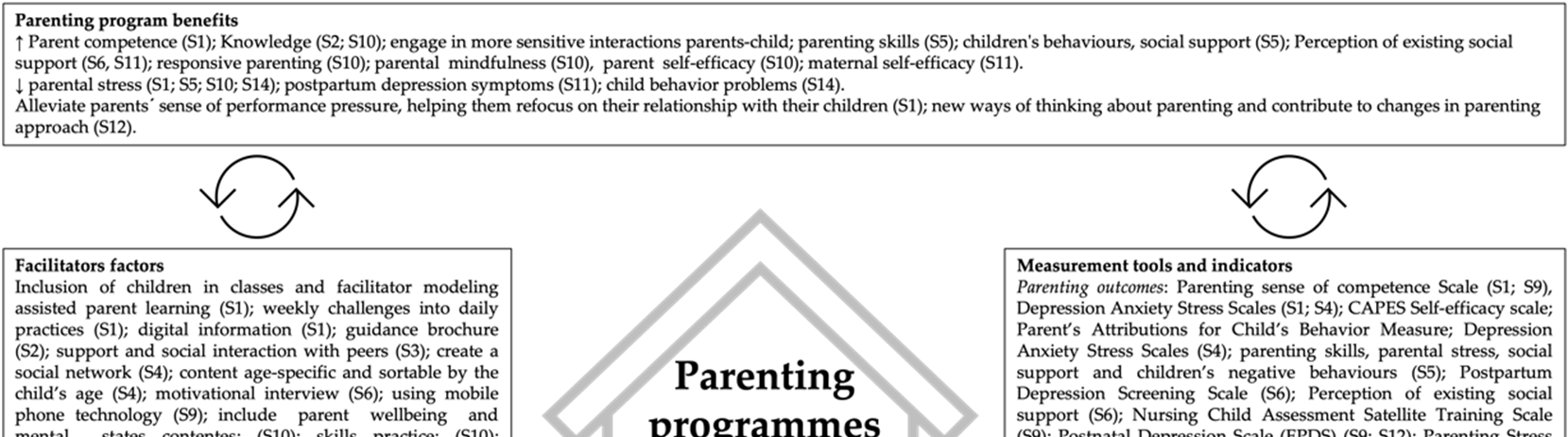
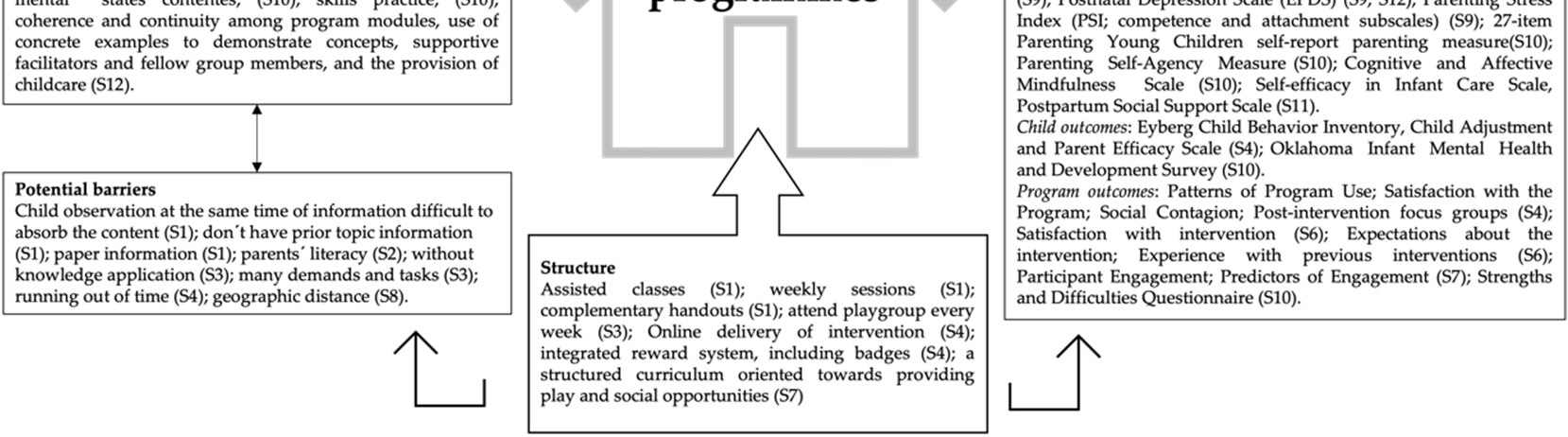
Figure 2. Figure 2. Key findings: benefits, structure, facilitator factors, potential barriers, measurement tools, Key findings: benefits, structure, facilitator factors, potential barriers, measurement tools,
and indicators of Parenting Programmes .
and indicators of Parenting Programmes.
4. Discussion 4. Discussion
This scoping review aimed to map in the literature the benefits of a parenting pro- This scoping review aimed to map in the literature the benefits of a parenting
gramme and the aspects to be considered when structuring a parenting programme for programme and the aspects to be considered when structuring a parenting programme
parents of children up to 3 years of age. for parents of children up to 3 years of age.
Several parenting programmes were found in the literature that have been imple- Several parenting programmes were found in the literature that have been
mented worldwide. implemented worldwide.
This article brings together in a single document the aspects that professionals should This article brings together in a single document the aspects that professionals should
consider when implementing a successful parenting programme. consider when implementing a successful parenting programme.
The evaluation of previous experiences will allow a better adjustment to the real needs
of the populations and how these parenting programmes can help families to develop their
role better, promoting their well-being, as well as the well-being of children, with positive
repercussions for society.
Promoting tailored early guidance programmes to families’ strengths and needs [ 41 ]
improves effective engagement and outcomes for families by increasing parenting qual-
ity [ 42 , 43 ]. A couple-centred psycho-educational programme can successfully promote
father involvement in parenting [44].
Studies mention virtual delivery as a facilitating factor for parenting programmes,
reaching more parents and expanding their networks. Other studies referred to facilitating
elements that corroborate the results of this scoping review: a structure according to
each family’s needs [ 45 ], considering parents’ disposition [ 42 ] and reducing distances and
costs [46].
Cultural barriers cannot also be forgotten [ 45 ]; thus, any materials produced should
be culturally relevant and meet the real needs of families.
This analysis agrees with the systematic review [ 18 ] results which state that programme duration, delivery mode, and location should be determined based on existing resources and systems, community needs, population risk profiles, and cultural context.
In summary, the present scoping review gives important clues in structuring parenting
programmes related to the content, means to be used, and duration. Several models of
structure may be used, but the literature is clear that these decisions affect the involvement
and motivation of parents’ adhesion to the programme.
This study provides an overview of parenting programmes, and the results guide several recommendations for the future.
The results of this article may help public health professionals to plan evidence-based parenting programmes with better outcomes for families, children, and society.
Considering the various benefits, such as increased parent competence, self-efficacy, lower parental stress, lower depression symptoms, and child behaviour problems, implementing parental programmes is an added value for parents, children, and society.
Parenting programmes are important ways to contribute to a healthy, sustainable,
and resilient society. They benefit parents by reducing signs of stress and depression
and increasing their self-efficacy and social behaviour, which leads to positive changes
in childcare. In addition, they bring benefits to the parent–child relationship by relieving
social pressure from parents, allowing a focus on the relationship with the child as an
individual. Finally, parenting programmes also positively affect society through knowledge
sharing, networking, and support so that children can grow up in healthy environments
and maximise their full potential.
Author Contributions: A.R.: Conceptualisation, Methodology, Validation, Investigation, Writing— original draft, Writing—review and editing, Visualisation, Supervision; F.M.: Conceptualisation,
Methodology, Validation, Investigation, Writing—original draft, Writing—review and editing, Visu- alization; H.S.: Conceptualisation, Methodology, Validation, Investigation, Writing—original draft, Writing—review and editing, Visualisation. All authors have read and agreed to the published
version of the manuscript.
Funding: The publication of this article was supported by Instituto Polit é cnico de Set ú bal.
Institutional Review Board Statement: Not applicable.
Informed Consent Statement: Not applicable.
Data Availability Statement: Dataset is available upon request to the authors.
Acknowledgments: We thank Ruth Paterson (School of Health and Social Care—Edinburgh Napier
University) for her collaboration on the linguistic revision of the article.
Conflicts of Interest: The authors declare no conflict of interest.